


Dental health is one of the most important elements that directly affects our quality of life. Over time, teeth lost can create difficulties not only in aesthetic terms but also in functional terms. Fortunately, with the advancement of technology, solutions for replacing lost teeth are becoming more reliable and aesthetic every day. As Sevenhills Dental Clinic, we offer the All-on-6 implant treatment that will allow you to regain your missing teeth permanently and naturally.
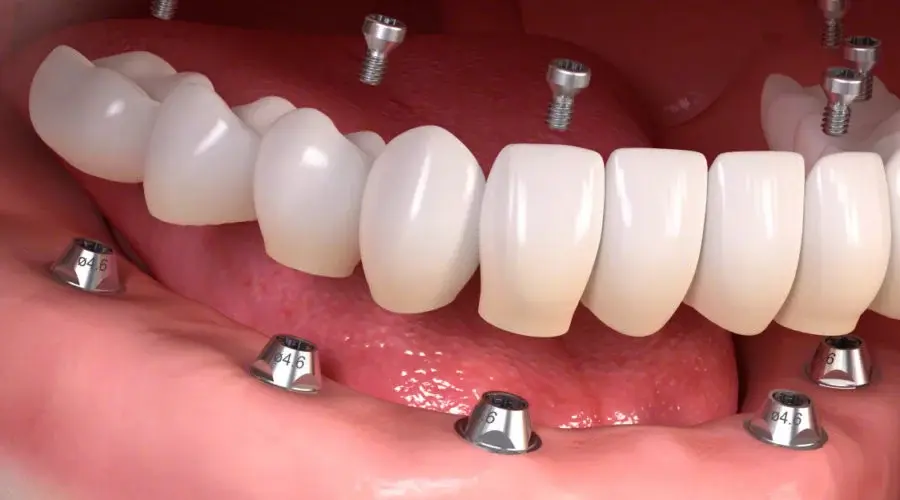
All-on-Six creates a bridge by placing six titanium implants in the jawbone and dental prosthetics are placed on this bridge. This treatment allows you to achieve a completely natural-looking and functional smile in a single session. Moreover, it allows you to eat, talk and show off your smile freely in your daily life, not only aesthetically. As SevenhillsDent Clinic, we will be with you every step of the way to determine the most suitable treatment plan for you.
We have made it our mission to provide you with the best service and help you regain your smile. Because we believe that every smile is a reflection of self-confidence and happiness.
Why opt for All on Six?
All-on-Six implant treatment is an advanced dental treatment method that provides a permanent solution to replace missing teeth. This treatment allows you to regain your teeth by placing six titanium implants in the jawbone. The six implants are strategically placed to provide adequate support for the upper or lower jaw , and a fixed set of prosthetic teeth is placed on top.
This treatment is usually performed on patients who are completely edentulous or have advanced tooth loss. All-on-Six is an advanced version of All-on-Four treatment, where six implants are used instead of four, thus providing stronger support.
What is the treatment process and how is it done?
The All-on-Six implant treatment process usually consists of several stages, and each stage can be customized to the needs of the patients. Here are the general steps of the treatment process:
- Initial Assessment and Planning: The treatment process begins with a comprehensive examination by the dentist. Your oral structure, jaw bone condition and general health are carefully examined. If necessary, advanced imaging techniques such as 3D tomography or x-rays are used to examine the details of your jaw structure. This stage is very important to determine your treatment plan and to determine the areas where the dental implants will be placed correctly. In addition, information is provided about the treatment duration, materials to be applied and pricing.
- Implant Placement: Once all the planning is done, the day of the procedure arrives. In the All-on-Six treatment, six titanium implants are placed in the jawbone. The procedure is usually performed under local anesthesia, so you will not feel any pain during the procedure. The implants are fixed to the jawbone and a healing process begins, lasting approximately 2 to 6 months. During this time, the implants fuse with the jawbone, forming a strong bond.
- Temporary Prosthesis Application: After the implants are placed, the patient continues his/her daily life with a temporary prosthesis. This temporary prosthesis provides comfort for the patient in terms of aesthetics and functionality. The temporary prosthesis is used until full integration with the jawbone is achieved. During this time, you will be able to use your teeth, speak and eat.
- Placement of Permanent Dentures: After the implants are completely healed and integrated with the jawbone, custom-designed permanent prosthetic teeth are placed. These prosthetics will have an aesthetic appearance resembling natural teeth, while also being durable and functional. Patients will now be completely free of their missing teeth and have a natural smile.
- Follow-up and Maintenance: At the end of the treatment process, it is important to see your dentist for regular check-ups. Regular maintenance and cleaning is recommended to ensure the healthy functioning of implants and dentures. Good oral hygiene extends the life of implants and reduces the risk of complications.
What Our Expert Says?
The All-on-Six treatment process begins with detailed planning and goes through several stages. It ends with the placement of implants in the jawbone, the application of temporary prosthesis, and then the placement of permanent prosthesis. At the end of the process, it is possible to achieve a strong smile, both aesthetically and functionally.
What are the materials used?
The materials used in the All-on-Six treatment are of great importance for the success and longevity of the treatment. From implants to dentures, many components affect the comfort of patients and the quality of the treatment result. Here are the main materials used in the All-on-Six treatment:
1. Titanium Implants:
The most commonly used implant material in All-on-Six treatment is titanium. Titanium is a biocompatible and strong material that fuses perfectly with the jawbone.
Features: Durable, rustproof, lightweight and long-lasting. Titanium implants can integrate with the jaw bone and provide a long-term solution.
2. Porcelain Dentures:
Porcelain or zirconium is usually used for the fixed prosthetic part of the All-on-Six treatment. Porcelain provides an aesthetic appearance similar to natural teeth and is durable.
Features: Porcelain, like natural teeth, transmits light and blends with the gum, thus achieving an aesthetic result. In addition, zirconium dental prostheses are a metal-free and extremely durable alternative.
3. Zirconium Implants (Alternative):
Zirconium is a preferred material, especially when aesthetic results are important. It blends well with the jawbone and can be used as an alternative to titanium implants.
Features: Since it does not contain metal, there is no risk of allergic reaction and it provides an extremely natural appearance in terms of aesthetics.
4. Dental Abutments:
Abutments are the parts that provide the connection between the implant and the prosthesis. They are usually made of titanium or zirconia.
Features: Abutments provide the fixation of the prosthetic tooth onto the implant. Both titanium and zirconia are strong and biocompatible materials.
5. Composite and Acrylic Materials (Temporary Prosthetics):
Composite or acrylic materials are usually used for temporary dentures. These materials provide aesthetic and functional temporary solutions for patients who are left without teeth until the implants heal.
Features: These materials allow temporary prosthetics to be made quickly and help the patient stay comfortable during the treatment period.
6. Ceramic Materials (Permanent Teeth):
The use of ceramics for permanent dentures is common. This material mimics the natural color and appearance of teeth.
Features: Ceramic teeth are durable, aesthetically natural looking and long-lasting. They are also compatible with the gums, allowing them to look like natural teeth.
7. Other Biocompatible Materials:
The materials used in implant and prosthesis designs are generally biocompatible and provide good integration with the body. Rarely used materials such as gold and platinum may also be preferred for some special cases.
These materials are the elements that directly affect the success rate, durability and aesthetic results of the treatment. Your dentist will help you achieve the best results by choosing the most appropriate materials according to your specific needs and jaw structure.
What are the advantages?
The advantages of the All-on-Six implant technique are that it offers results that are close to natural teeth, both aesthetically and functionally. Here are some of the key advantages of this technique:
- More Support and Stability: Using six implants allows the prosthesis to be placed with more support and stability. This provides extra stability, especially for patients with low bone density.
- Short Treatment Time: Implants are strategically placed and temporary dentures are usually fitted to patients immediately after the procedure. This ensures that patients are not left without teeth during the healing process and shortens treatment time.
- Less Bone Loss: Using six implants can reduce bone loss by evenly distributing the load on the jawbone.
- Aesthetic and Functional Advantages: Having a natural smile increases patients’ self-confidence in their social relationships and helps them perform daily life activities more easily.
- Single-Session Application: All-on-Six implant treatment can be completed in a single surgical procedure and patients can have a fixed denture on the same day.
How Advantageous is All On Six Implant Technique Compared to Other Implants?
The All-on-Six implant technique has several advantages over other implant methods. In this technique, a fixed prosthesis is placed using six dental implants. In this way, patients get more support and stability. This means more durable prostheses, especially for patients with low bone density or more tooth loss. In addition, the treatment process is fast and temporary prostheses are usually installed on the same day, allowing patients to quickly return to their normal lives.
The All-on-Six technique provides the closest results to natural teeth, both aesthetically and functionally. Patients achieve a similar appearance and function to natural teeth. Implants integrate with the jawbone, preventing bone loss and keeping the bone healthy. Implants made of titanium have high durability and can be used for a lifetime with proper care. However, they may not be suitable for every patient and require a surgical procedure. Therefore, the patient’s general health status and oral structure are examined and a decision of suitability is made.
What is the difference between All-on-Four and All-on-Six?
The biggest difference between All-on-Four and All-on-Six treatments is the number of implants used. All-on-Four treatment uses four implants in the jawbone , while All-on-Six treatment uses six implants . This means All-on-Six offers more stability and durability. Six implants provide more support and provide a more stable solution in the long term.
On the other hand, All-on-Four stands out with its shorter procedure time and lower cost, but since only four implants are used, stability may be a bit more limited. All-on- Six provides more balanced and aesthetic results thanks to more implants, but it may be a bit more in terms of treatment time and cost. It would be best to consult a dentist to determine which treatment is more suitable.
Who is All On Six Implant Suitable For?
All-on-Six treatment is the ideal solution for people who are experiencing tooth loss or are about to lose their teeth completely. This treatment is particularly suitable for the following situations:
- People who are completely edentulous or have advanced tooth loss: Patients who have lost most or all of their teeth can obtain a permanent and functional solution to replace their missing teeth with the All-on-Six treatment.
- Patients with sufficient jawbone: Implants provide stable support by fusing with the jawbone. Therefore, they are an ideal treatment option for people with sufficient jawbone structure. In people with bone loss, bone grafting applications can also be included in the treatment.
- People who use removable dentures: If people who are not satisfied with their removable dentures or have to constantly remove their dentures are looking for a fixed solution, the All-on-Six treatment is quite advantageous. This treatment increases the quality of life by fixing the dentures.
- People in good general health: Implant treatment may require general or local anesthesia. Therefore, it is important for patients to be in good general health to be eligible for treatment.
While All-on-Six treatment can provide significant aesthetic and functional gains, it may not be suitable for every patient. Therefore, a thorough evaluation and planning with a dentist is necessary to achieve the best results.
Who is Not Suitable For?
The All-on-Six implant technique is not suitable for every patient. The decision of suitability is made by examining the patient’s general health, oral and dental health, jaw structure and edentulousness. The following situations include patient groups that are not suitable for the All-on-Six implant technique:
- Insufficient Bone Volume: Patients with insufficient jaw bone are not suitable for the All-on-Six implant technique. However, this problem can be overcome with bone grafting.
- Serious Systemic Health Problems: The All-on-Six implant technique is not suitable for patients with serious systemic health problems such as uncontrolled diabetes and heart diseases.
- Chronic Infections: Active infections or chronic infections are not suitable for these patients as they may lead to implant failure.
- Uncontrolled Osteoporosis: Patients with osteoporosis and uncontrolled osteoporosis are not suitable for the All-on-Six implant technique.
- Smoking: Smoking is a relative contraindication as it may increase the risk of implant failure.
- Advanced age: Advanced age may be considered a relative contraindication, but this depends on the general health status of the patient.
- Poor Oral Hygiene: Patients with poor oral hygiene are carefully evaluated as this may increase the risk of implant failure.
How Long Does Treatment Last?
The total duration of All-on-Six implant treatment usually varies between 4 and 6 months. The first stage begins with an evaluation and planning process with the dentist. In this step, your oral structure, the condition of your jawbone and your general health conditions are reviewed. If everything is appropriate, preparations are made for the placement of implants. It takes approximately 2 to 6 months for the implants to fuse with the jawbone and achieve full integration. During this period, patients can continue their normal lives using temporary dentures.
Once the implants have completely healed, custom permanent dentures are prepared and placed. This process can take several weeks for your dentist to take meticulous measurements and ensure the dentures fit perfectly. As a result, although the All-on-Six treatment may take several months in total, a long-term, natural-looking solution is achieved after the treatment.
What Should the Recovery Process Be Like After Treatment?
Following All-on-Six treatment, you may experience symptoms such as mild swelling, bruising and pain in the first few days. This is a natural part of the healing process of the jaw tissue after implant placement and usually resolves within a few days. Your dentist can recommend painkillers and cold compresses to help alleviate these discomforts. In addition, temporary dentures are placed to ensure patients are comfortable during the treatment process.
During the healing process, it is important to continue to clean your teeth regularly, but avoid brushing too hard for the first few days. While the implants are fusing with the jawbone, you should be careful to maintain oral hygiene and avoid overbiting or eating hard foods. Once the implants have fully integrated, permanent dentures will be placed, and at this point your treatment is complete. With regular follow-up appointments, you can ensure that your implants continue to function healthily for many years.
Is All on Six Painful?
There is usually minimal pain with the All-on-Six treatment because local anesthesia is used during the procedure, so there is no pain felt during the implant placement. However, there may be some mild pain, swelling, or discomfort that may last for a few days after the treatment. This is part of the natural healing process and usually subsides on its own within a few days.
To manage the pain, your dentist may suggest painkillers and cold compresses. Most patients can control the pain after treatment and begin to feel relief within a few days. After the treatment process is complete, patients usually experience less discomfort when permanent dentures are placed.
What Are the Additional Procedures for the All On Six Implant Technique?
Adequate jawbone support is necessary for the All-on-Six treatment to be successful. However, in some patients, the jawbone structure may not be strong or wide enough. In these cases, additional procedures such as a sinus lift and bone graft may be performed to strengthen and improve the jawbone.
Sinus lift comes into play when the jawbone is not sufficient, especially in the upper jaw back areas. The sinus cavities are lifted up and bone is added to this space to increase the volume of the jawbone. This process is necessary so that the implants can be properly placed in the jawbone.
Bone grafting is the process of adding bone to areas where there is loss of jaw bone. If the jaw bone is not sufficient, new bone tissue is added to these areas with bone grafting. Bone grafts can be taken from the patient’s own bone, or synthetic or donor bone can be used. This process is extremely important to ensure stable placement of implants and to ensure long-term success.
However, sinus lift and bone graft procedures may not be necessary for every patient. Your dentist will decide whether these procedures are appropriate for you after a detailed examination of your jaw structure. If your jaw bone is sufficient, All-on-Six treatment can be completed without the need for these additional interventions.
What are the Prices of All On Six Implants?
All-on-Six implant treatment offers an effective solution for patients with missing teeth or those who have lost their teeth. Prices for this treatment in Türkiye may vary depending on factors such as the materials used, clinical experience and geographical location.
As Sevenhills Dental Clinic, we offer treatment plans specific to the needs of each patient. You can contact us to get more detailed information about pricing, treatment process and materials used. You can visit our Contact page to make an appointment or send your questions.
All On 6 Implant Technique Summary
View what you need to know about the All-on-Six implant technique in the summary table.
| Treatment Step | Details |
|---|---|
| Treatment Process | Placement of All-on-Six implants and placement of fixed prosthesis |
| Length of Stay | Average 10-15 years (longer with proper care and hygiene) |
| Number of Visits | 3-4 visits (initial examination, implant placement, prosthesis placement, follow-up) |
| Treatment Duration | 2-3 hours (implant placement process) |
| Anesthesia | Local anesthesia (sedation option available) |
| Recovery Time | 2-6 months (for implants to fuse with the jaw bone) |
| Temporary Prosthesis | Once the implant is placed, it will be placed within 1-2 weeks. |
| Permanent Prosthesis Placement | After 2-6 months (after complete healing of implants) |
| Follow-up Visit | Regular check-ups after the first few weeks and then every 6 months |
The Right Address for All On 6 is Sevenhillsdent Clinic
All-on-Six treatment is a perfect choice for those looking for a permanent and reliable solution for their dental health. As Sevenhills Dental Clinic, we offer this treatment with high quality with our expert staff and state-of-the-art equipment. Each individual’s needs are different and we aim to achieve the best results by preparing personalized treatment plans for each of our patients. We work meticulously to provide the most appropriate solution in line with your jaw structure and health status. A perfect smile and healthy teeth directly affect your quality of life and achieving this goal is much easier with All-on-Six.
If you want to regain your missing teeth with a permanent and aesthetic solution, Sevenhillsdent Clinic is ready to guide you on this journey. You can always reach us to determine the most suitable treatment method for you and regain your dental health. Rediscover your smile, increase your self-confidence and improve your quality of life. You can contact us, ask your questions and make an appointment via our contact page. We would be very happy to host you in our clinic!


